
Zadaka Health · Colorado
Understanding
Ketamine Therapy
A comprehensive guide to how ketamine works, what the research shows, the real benefits and risks — and how medically supervised care makes all the difference.
A comprehensive guide to how ketamine works, what the research shows, the real benefits and risks — and how medically supervised care makes all the difference.
Ketamine has been used in medicine since 1970, when the FDA approved it as a general anesthetic. It appears on the WHO's List of Essential Medicines and has been used safely in emergency rooms and surgical suites for decades.
In recent years, groundbreaking research revealed ketamine's remarkable potential for mental health — particularly for people who haven't found relief with traditional antidepressants. Unlike conventional antidepressants that take weeks to work, ketamine often produces meaningful changes within hours.
At Zadaka Health, ketamine therapy refers to the medical clearance, preparation, and integration surrounding your experience — not the infusion itself, which is administered at partnering licensed clinics.
Ketamine infusion therapy for depression, anxiety, and PTSD is currently off-label — meaning it is legally prescribed and administered but not yet FDA-approved for these uses (except intranasal esketamine/Spravato for treatment-resistant depression, approved 2019). Off-label use is common and does not mean unsafe; it means the research is ongoing and promising.
Ketamine significantly boosts Brain-Derived Neurotrophic Factor — a protein that promotes the growth and reconnection of neurons. Chronic depression is associated with loss of neuronal connectivity; ketamine appears to reverse this, essentially "regrowing" pathways that depression has worn away.
The default mode network is responsible for ruminative, self-referential thinking — the "loop" of negative thoughts common in depression. Ketamine temporarily quiets this network, creating a window of cognitive flexibility and a loosening of rigid mental patterns.
Unlike SSRIs, which target serotonin, ketamine works by blocking NMDA receptors for glutamate — a neurotransmitter linked to brain excitotoxicity. This entirely different mechanism is why ketamine can work for people who haven't responded to conventional antidepressants.
Every ketamine journey at Zadaka Health follows a clear, medically supervised sequence — so you are fully supported at every stage.
Comprehensive medical and psychiatric review, diagnosis documentation, consent, and a personalized care plan — in-person or via telehealth.
Intention-setting, education on what to expect, and building the emotional foundation for a safe and meaningful experience.
Clinically guided ketamine session with personalized dosing. May be facilitated with your own provider or with Leor's direct support — determined at evaluation.
Follow-up sessions to process what emerged, build meaning, and translate insight into lasting change in how you think, feel, and live.
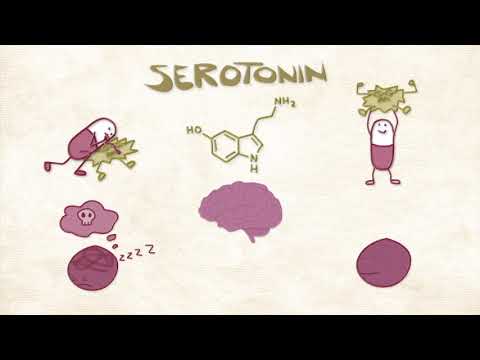
These short educational videos from credible medical sources explain how ketamine works, why it's effective for treatment-resistant depression, and what patients can expect. Click either card to watch directly on YouTube.
Videos open on YouTube in a new tab — no plugin required.
 Full episode
Many patients report meaningful improvement within hours — compared to 6–8 weeks for SSRIs.
~70% response rates in patients who have failed multiple antidepressant trials.
Creates a period of increased brain flexibility — when integration work produces the most lasting change.
Ketamine can reduce suicidal thoughts within hours — a need no conventional antidepressant addresses quickly.
Over 50 years of clinical anesthetic use provides a robust safety record under appropriate medical supervision.
Ketamine produces a dissociative state. Proper dosing and supervision significantly reduce intensity and risk.
Contraindicated in uncontrolled hypertension, active psychosis, certain cardiac conditions, and some medications. Medical screening is required.
Without structured integration, benefits often fade. The medicine opens a window — integration determines what you do with it.
Ketamine has abuse potential. Medical oversight, appropriate spacing between sessions, and clear protocols minimize this risk.
Ketamine works best as part of a broader therapeutic plan — not a replacement for psychotherapy or lifestyle change.
The evidence base for ketamine in mental health is robust and growing. Here are the key findings that inform evidence-based care.
Multiple studies confirm ketamine produces antidepressant effects within hours that match or exceed standard medications. Former NIMH Director Tom Insel called it "the most important breakthrough in antidepressant treatment in decades."
Murrough et al., Biol Psychiatry 2013; Insel, NIMH
Across multiple controlled trials, ketamine consistently demonstrates meaningful symptom reduction in roughly 70% of patients with treatment-resistant depression — a population that had exhausted other options.
Aan Het Rot et al., 2010; Murrough et al. 2013
A 2019 study using Ketamine-Assisted Psychotherapy reported significant decreases in both depression and anxiety — with outcomes surpassing ketamine alone. Preparation and integration determine depth and durability of change.
Dore et al., Journal of Psychoactive Drugs, 2019
Ketamine rapidly promotes growth of new synaptic connections at a rate exceeding conventional antidepressants. This neuroplastic window is the mechanism behind why integration immediately following a session is clinically essential.
Duman et al., Neuron 2019; Zanos & Gould 2018
A plain-language walkthrough of the neurological mechanisms behind ketamine — from glutamate blockade to BDNF release — and why these effects are so clinically significant for people who haven't found relief through conventional treatments.
Read MoreThe ketamine session itself is just a few hours. What you do in the days and weeks after — how you process, reflect, and translate insight into life — is what determines whether those hours produce lasting change or fade.
Read MoreAn honest, evidence-based comparison — including what the STAR*D study revealed about medication response rates, and why ketamine's mechanism and speed represent a genuine clinical breakthrough.
Read MoreNo. Zadaka Health specializes in medical clearance, preparation, and integration — the clinical pieces that determine whether your experience is safe and meaningful. Ketamine infusions are administered at partnering licensed clinics. Leor refers clients to appropriate providers and coordinates care throughout.
Candidacy is determined through a comprehensive medical and psychiatric evaluation — which is exactly what Zadaka Health provides. Good candidates typically include people with treatment-resistant depression, anxiety, PTSD, or trauma who haven't found adequate relief through conventional treatments. A free consultation is the best first step.
Ketamine produces a dissociative state that can surface unexpected emotions and psychological material. How you enter that experience — your mindset, intentions, and sense of safety — profoundly shapes what emerges and how you relate to it. Preparation builds the internal conditions that allow the medicine to work with you, not against you.
Without integration, the benefits of ketamine tend to fade within days to weeks. The neuroplasticity window opened by ketamine is an opportunity — but insight without action rarely produces lasting change. Integration is what transforms a profound experience into a different way of living.
Zadaka Health is a private pay practice. Ketamine infusions are typically not covered given their off-label status; intranasal esketamine (Spravato) may have some coverage for qualifying patients. A superbill can be provided for potential out-of-network reimbursement.
Ketamine has a known potential for psychological dependence with frequent recreational use. Within a supervised clinical protocol with appropriate spacing, this risk is significantly reduced. Zadaka Health's evaluation specifically screens for substance use history and contraindications — and transparency about your history is always welcome.
Schedule a free consultation or reach out directly through the Simple Practice portal.
Open Simple Practice PortalThis page is for educational purposes only and does not constitute medical advice or a provider-patient relationship. Zadaka Health provides medical evaluation, preparation, and integration only — IV ketamine is administered at separately licensed facilities. Natural medicine facilitation is provided under Colorado's Natural Medicine Health Act. Individual results vary. If you are in a mental health crisis, please call 988 or 911.